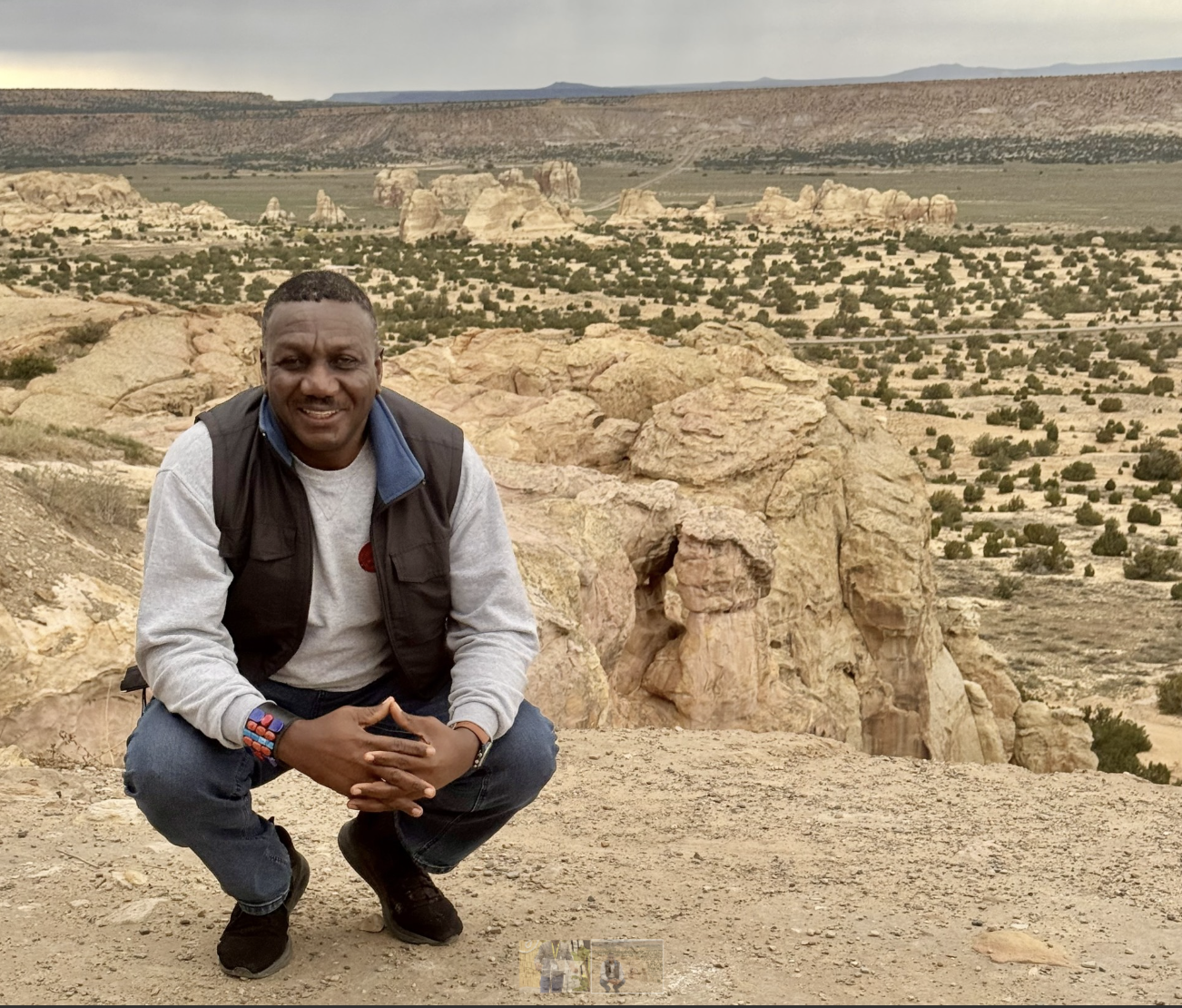
Neuroimaging : From Nigeria to the World
Dr. Godwin Ogbole
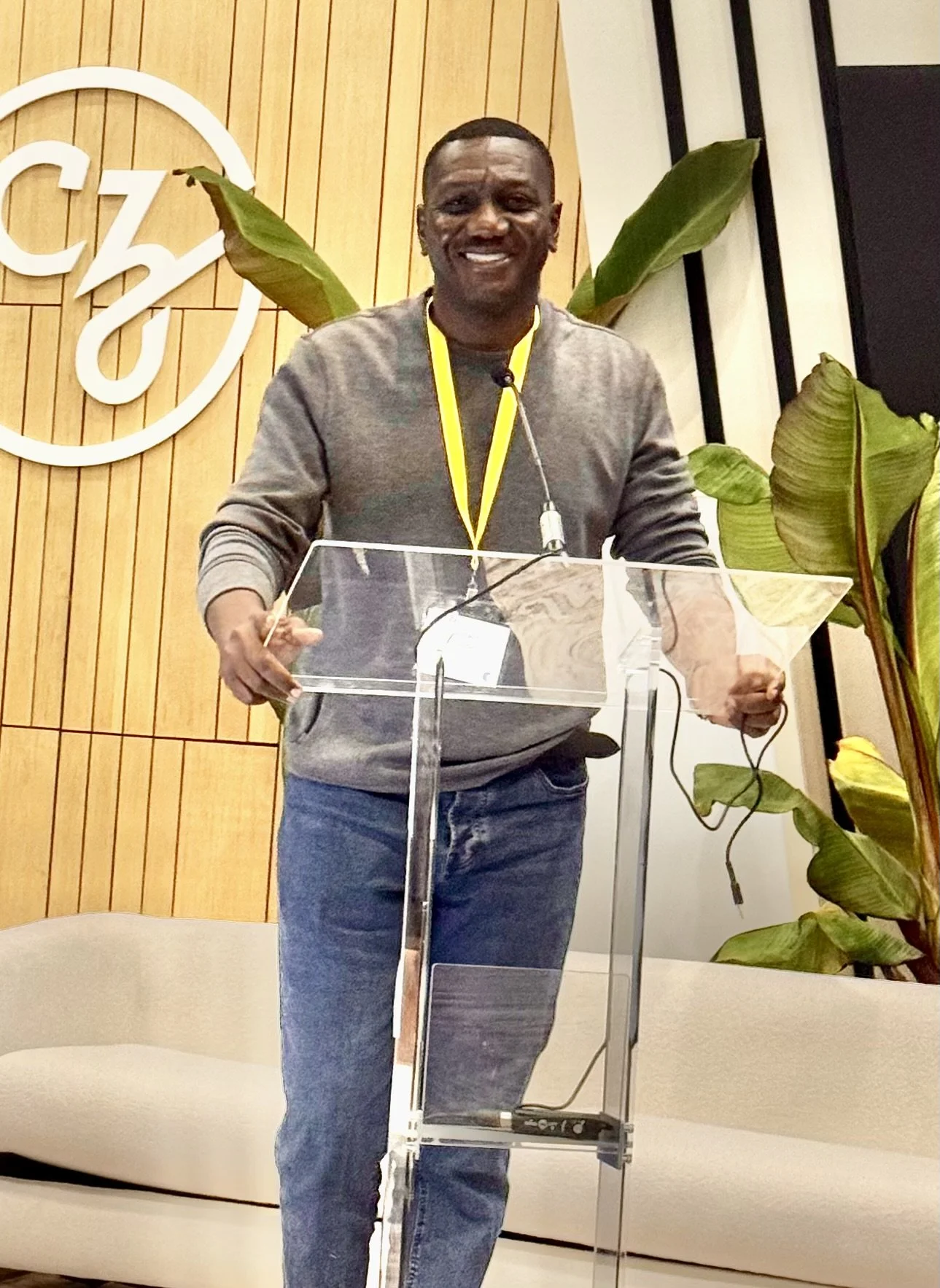
SPIN: What was your medical training experience like in Nigeria?
GO: Everything began in Ibadan.
My medical school years, my residency training, my early clinical life—all of it was shaped by the University of Ibadan and the University College Hospital (UCH), Ibadan. At the time, I did not fully understand how deeply those years would influence the kind of doctor, teacher, and researcher I would become. Looking back now, I realise that Ibadan gave me more than a medical education. It gave me a way of seeing the world.
I earned my MBBS from the University of Ibadan, completed my mandatory National Youth Service Corps in Oyo town, only about an hour from Ibadan, and later returned to Ibadan for specialist training. I obtained both of my specialist degrees in Ibadan. Along the way, I also completed two master’s degrees at the University of Ibadan, one in Radiation Physics and another in Epidemiology, and eventually earned a doctorate (MD) from the National Postgraduate Medical College in Lagos.
But the real story is not only in the qualifications.
Training at UCH taught me things no curriculum could fully capture. It taught me how to work in a busy, demanding, and often under-resourced environment where patients were not abstractions in a textbook, but real people whose lives depended on the decisions we made. We saw strokes, head injuries, oncological cases, children with epilepsy, and many other complex cases. Often, we had to do our best with limited tools, limited space, and limited time. That tension between enormous clinical need and scarce resources stayed with me. In many ways, it became the compass for my career.
Medical school itself was both exciting and tough. We had outstanding teachers—some of the best anywhere in the world—but the environment was challenging. The classes were large, the facilities were stretched, and basic resources were not always reliable. Electricity was erratic. Sometimes we had to search for places with “light”, outside our hostels, just to study. Water and accommodation were also difficult at times. Yet, somehow, we kept going.
I came from a background where there was never much to waste. I could not always afford medical textbooks, so I often shared with classmates who had them. Sometimes I photocopied chapters or waited until a friend was not using a book so I could study from it. At the time, these things felt normal. We did not always pause to call them hardship. We simply adjusted, survived, and moved forward.
What made it even more striking was that we knew we were at Nigeria's premier medical school, one of the finest on the continent at that time. We had heard stories from older generations about a time when resources were better, classes were smaller, and students were more fully supported. By our time, the economic realities had changed, and things had become more difficult. But the standard of training remained high, and the clinical exposure was exceptional.
Those years produced a certain resilience in us. They also produced ambition. Many of my classmates went on to practice in different parts of the world—the United States, the United Kingdom, Australia, Sweden, the Middle East, and many more places. More than half of my class now works outside Nigeria. In many ways, that tells a story about both the strength of our training and the limitations of the system that trained us.
For me, Nigerian medical training was a mixture of excellence and struggle. It gave us world-class teachers, unforgettable clinical exposure, and a strong sense of duty. But it also showed us the cost of underinvestment in health systems and education. We learned to improvise, to think clearly under pressure, and to hold our heads high even when the odds were not always kind.
Looking back, I would say we were shaped by both the institution and the circumstances.
“UCH gave us medicine. Nigeria gave us resilience. Together, they shaped us.”
SPIN: What drew you specifically to neuroradiology and brain health?
GO: I have always been fascinated by the brain.
The brain is where so much of what makes us human resides—memory, language, movement, personality, emotion, and identity. When something goes wrong there, the consequences are often profound, not only for the patient but also for the entire family. A stroke can change a life in minutes. Dementia can slowly take away the person a family once knew. A child with epilepsy can carry a burden that affects schooling, development, and the future. These are not abstract conditions. In Nigeria and across Africa, they are part of daily clinical life, often with an enormous and under-recognized burden.
My interest probably began much earlier than I realized, during medical school. One of the most difficult courses I took was neuroanatomy. It was tough, and the textbook we used was not the easiest book in the world to love. But we had a remarkable teacher, Professor M. T. Shokunbi, who was both an anatomist and a neurosurgeon. He had a way of bringing neuroanatomy alive. He dramatized it, drew it, explained it, and somehow made a difficult subject feel exciting. Many of us loved him for that. He gave us a window into the brain that stayed with me.
Later, during my residency and early specialist training, neuroradiology became a natural direction for me. I was drawn to the brain's complexity as well as to technology. I liked computers. At that time, the CT scanner was one of the most sophisticated machines available to us, and much of the most compelling work involved imaging the brain. I found myself spending more and more time with the machine, with the images, and with the cases. I worked closely with neurosurgeons and began to see how imaging could completely change the direction of care.
That was one of the turning points for me. I realized that imaging was not simply a supporting tool. In many situations, it determined the diagnosis, the urgency of treatment, the surgical plan, the prognosis, and sometimes whether a patient lived or survived with meaningful function. In brain health, imaging can be the difference between guessing and knowing.
“In Africa, where access to advanced imaging remains limited, that gap becomes more than a technical problem. It becomes a survival problem.”
Over time, my work became increasingly focused on stroke, dementia, and paediatric epilepsy. These conditions drew me in because they sit at the intersection of clinical need, neuroscience, technology, and public health. They also reflect some of the biggest challenges facing African health systems: late diagnosis, limited access to imaging, shortage of trained specialists, and under-representation in global research.
My collaborations also shaped this path. Many of the people I have worked with are in neuroscience, neurology, dementia research, or stroke research. So, in many ways, my movement into brain health was not forced. It was a natural flow—from clinical radiology to neuroradiology, from neuroradiology to neuroscience, and from neuroscience to global brain health.
I still find the brain deeply humbling. It is a huge universe. I do not think any of us will ever fully understand all its depths. The field is difficult, yes, but I have always been drawn to difficult things. There is always something new to learn, something new to question.
What drew me to neuroradiology and brain health was a mix of curiosity, challenge, and technology. The brain captured my imagination early. My patients gave that curiosity purpose. And the gaps in care in Africa made the work feel urgent and personal.
SPIN: What have been the most defining challenges in your career, and what kept you going?
GO: The most defining challenge has been resources. Resources, resources, resources.
Not talent. Not ideas. Not ambition. Those have always been present. The real challenge has been having the tools to do the work, to compete, to contribute, and to be taken seriously on the global stage. In medicine, and especially in imaging, equipment is not a luxury. It is the difference between seeing and guessing, between timely diagnosis and life or loss.
For decades, access to MRI across much of sub-Saharan Africa has been desperately inadequate. Yet MRI is central to the diagnosis and management of many neurological conditions. So, with lack of imaging access, the consequences are not theoretical. They are deeply human. A diagnosis is delayed. A treatment window is missed. A family is left without answers.
There has also been another challenge, quieter but equally real: the struggle to be taken seriously in global research spaces when you are working from Africa.
“There is sometimes an unspoken assumption that rigorous science only happens in high-income countries, and that Africa is mainly a place where data is collected, not where ideas are born. I have had to push back against that a few times.”
But the challenges have not only been about equipment or recognition. They have also been about systems: poor infrastructure, unreliable electricity, limited funding, uncomfortable work environments, environmental degradation, weak leadership, and sometimes painful mismanagement of resources. People often speak of “resource-limited settings,” but the problem is not always simply that resources are limited. Sometimes they are poorly managed, poorly distributed, or misdirected.
At times, it can feel like battling a multi-headed dragon. You escape one problem, only for another to appear. You solve an equipment issue, only for funding to become the obstacle. You secure funding, only for infrastructure to fail. You build a team, only for the system to make it difficult for people to thrive. The constraints multiply from every direction. And if one is not careful, those constraints can cage the mind. They can reduce a person from dreaming to merely surviving.
I have always wanted to explore, to build, to contribute, and to show that excellent science can come from here or be done here. That is what kept me going—the belief that we can do better, and that we deserve another chance. Perhaps the first chance was lost. Perhaps it was stolen. Perhaps it was misused. But I still believe we can create another one.
What has kept me going more than anything is that a vibrant mind cannot be defeated and that, with God, nothing is impossible.
I draw strength from my faith in God. I believe in the positive energy of young minds to innovate. I see in them a refusal to accept that where you are born should determine the limits of what you can become. That kind of hope is powerful. It makes it difficult to quit.
I have seen enough talent, enough courage, enough brilliance, and enough hunger in this environment to know that something better is possible.
And that belief, stubborn as it may sound, has carried me through.
SPIN: Your work exemplifies frugal innovation. How do you see this approach shaping neuroradiology going forward?
GO: I want to be clear that frugal innovation is not about settling for less. It is about refusing to let the absence of ideal conditions become an excuse for inaction. My research focuses on developing low-field MRI technology for stroke and dementia in resource-limited African settings.
“For a long time, the assumption was that meaningful brain imaging required a 1.5- or 3-Tesla machine in a purpose-built, shielded room. We are methodically dismantling that assumption.”
I was part of the team that assembled Africa's first ultra-low-field MRI prototype in Uganda in 2022, and the work we have done using image-enhancement algorithms on low-field data has been genuinely exciting. For paediatric neuroradiology, especially in district hospitals for children with hydrocephalus and cerebral infections such as cerebral malaria, and for neonates in rural settings, portable low-field MRI changes the equation for diagnosis and outcome in these complex cases. This has been well demonstrated by Karen Chechuti's work in Malawi. The future belongs to solutions designed for our context, not imported ones designed for a different climate.
SPIN: How do you see Africa contributing uniquely to global neuroimaging research?
GO: Africa offers something irreplaceable: diverse, unique patient populations with distinct genetic profiles, disease presentations, and environmental exposures that are profoundly understudied by global science. The Stroke Investigative Research and Educational Network (SIREN) is the largest stroke database in sub-Saharan Africa, and we built it. The pattern of stroke in young Africans, the neuroimaging phenotype of dementia in our populations, and the epilepsy burden in children are questions that the world's understanding of neuroscience is genuinely incomplete without.
“Africa is not just a beneficiary of global research; we are indispensable contributors to it. The sooner this is widely understood, the better for global science.”
SPIN: How do you foster collaboration across disciplines and countries?
GO: Collaboration does not happen by accident. It has to be built patiently and deliberately.
For me, collaboration begins with trust. Before you can build a programme, write a grant, share data, or develop a research network, people must first believe that you are serious, consistent, and committed to something larger than yourself. That kind of trust is not created in one meeting. It grows through conversations, shared work, small acts of reliability, and the willingness to stay at the table even when things are difficult.
I have always believed that if we want African neuroscience and neuroradiology to grow, we cannot work in isolation. The brain does not belong to one discipline. Stroke care needs neurologists, radiologists, nurses, rehabilitation specialists, public health experts, physicists, engineers, data scientists, and policymakers. Dementia research needs clinicians, neuropsychologists, imagers, geneticists, community workers, and families. MRI itself is a beautiful example of collaboration: medicine, physics, engineering, computation, and human care all meeting inside one machine.
That is why institution-building has been important to me.
I founded the Neuroradiology Society of Nigeria (NRSN) to create a professional home where neuroradiologists could connect not only with one another but also with neurologists, neurosurgeons, neuroscientists, physicists, radiographers, engineers, and other clinicians. The Society, affiliated with the Association of Radiologists in Nigeria, became a platform for visibility, mentorship, training, and advocacy. It was a way of saying: we are here, we have expertise, and we can build together.
Across the continent, I have also been involved as one of the founding members of the Africa Chapter of the International Society for Magnetic Resonance in Medicine. That platform has been especially important because MRI in Africa is not just a technology issue; it is also a training, access, equity, and implementation challenge. Through the Africa Chapter, we have worked to connect African experts with global partners and to create pathways for research capacity building, technical training, and shared scientific growth.
International fellowships have also shaped the way I think about collaboration. I have been fortunate to spend time at institutions including Harvard, UCSF, Northwestern University, University College London, and Oxford. Each of those experiences opened a different window. They showed me how strong systems work, but they also reminded me that global science must not be a one-way road. Africa should not simply send talent abroad or supply data for others to interpret. We must be part of the thinking, design, analysis, leadership, and authorship.
My Oxford fellowship was particularly meaningful. It opened doors I had not fully anticipated. One outcome I remain proud of was helping to facilitate an academic exchange programme in neuroscience and stroke between the medical colleges of Oxford and the University of Ibadan. That collaboration grew in part through the work of the Frederick Foundation, founded and led by Professor Margaret Esiri, an emeritus professor of neuropathology at Oxford. Her own connection to Nigeria was deeply personal: she had been married to a Nigerian doctor whose life and work were affected by the challenges of stroke in Nigeria. That story gave the collaboration a human depth. It was not just institutional. It was also personal, historical, and moral.
In many ways, this is how meaningful collaboration works. It begins with people. Then it becomes a relationship. Then, with care, it becomes a programme, a network, a training pathway, or a movement.
I try to foster collaboration by bringing people into the same room—sometimes physically, sometimes virtually—and helping them see that their work is connected. A physicist may not immediately see the patient with hydrocephalus or a brain tumour. A clinician may not immediately see the engineering problem inside an MRI scanner. A data scientist may not immediately see the family waiting for a diagnosis. But when those worlds meet, something powerful happens.
The work becomes bigger than any one discipline.
For me, the goal has never been collaboration for its own sake. The goal is impact: better training, better imaging, better diagnosis, better science, and ultimately better care for patients here and everywhere. That requires humility. It requires listening. It requires giving credit. It requires allowing others to lead. And it requires building structures that can outlive one person’s enthusiasm or dream.
Trust underpins all of it. You build it, by relationship, promise by promise, project by project. And over time, if you are fortunate, those relationships become a network strong enough to carry real weight and make a real difference.
SPIN: What recent advancements in neuroimaging excite you the most?
GO: Two things, genuinely. The first is the progress in portable, ultra-low-field MRI. The convergence of affordable scanners with AI-assisted interpretation is something that, five years ago, felt theoretical and now feels tangible. I have been using machine learning techniques to interpret brain images that would previously have been considered too low in quality to be diagnostically useful, because that is precisely the kind of image most African facilities are working with.
The second is automated lesion analysis. We are working on AI-powered automated lesion segmentation of cranial CT images in adult stroke patients in a low-resource setting, and the implications for acute stroke management, where every minute matters, are enormous. Being able to quantify stroke burden quickly is a genuine game-changer for clinical care here.
I'm also very interested in what we're doing with pediatric epilepsy imaging. Our research has focused on enhancing epilepsy lesion visualisation on low-field MRI using image quality transfer, with a goal of clinical translation and potential use in developing countries; early findings are encouraging.
SPIN: What are the biggest barriers to AI adoption in low-resource settings?
GO: Let me be direct about this, because there is a lot of optimistic noise around AI in global health that glosses over the real difficulties. The first problem is that most AI tools in neuroimaging were trained entirely on high-quality data from well-resourced institutions. When you apply them to the lower-resolution, often artefact-heavy images produced by equipment in our settings, they frequently fail or perform poorly.
“Our experience testing automatic segmentation algorithms on African patient data showed that modifications were necessary even to get promising results on a small dataset. Scaling that rigorously is a different challenge altogether.”
Second, there's the infrastructure beneath the AI: reliable electricity, internet connectivity, and computing capacity. Third, there is a shortage of local expertise that can validate, adapt, and maintain these tools. You cannot sustainably deploy a system if no one locally understands it deeply enough to troubleshoot it. The solution, as I see it, is to build African-led pipelines from African data, for African populations. That's what we're working towards at the moment.
SPIN: Is there a patient or moment in your career that deeply stayed with you?
GO: There are many, but one has stayed with me very clearly.
A young woman, about 18 or 19, came for an MRI after struggling with visual problems for nearly five years. She had moved from one place to another, seeing different providers, changing glasses, hoping her sight would improve. By the time she reached us, she had almost completely lost her vision. When we did the MRI, the answer was there: a large pituitary macroadenoma pressing on her optic chiasm—the pathway responsible for vision. It was heartbreaking because this was not a mysterious disease. It was something imaging could have shown much earlier. With earlier access to CT or MRI, her story might have been very different.
That case affected me deeply. Here was a young woman, at the beginning of life, losing her sight not simply because of disease, but because of delayed diagnosis, cost, lack of awareness, and poor access to neuroimaging. Moments like that stay with you. They remind you that imaging is not just technology. It is time. It is dignity. It is a chance to save what can still be saved.
And they also remind me of the many patients who never even make it to a scanner. That is the accessibility question that continues to drive me and my work.
SPIN: How do you maintain balance while leading large-scale initiatives?
GO: I won't pretend I haven't perfected this. What I can say is that I am learning that balance is something you choose deliberately, not something that just happens. Leading a pan-African coalition, managing a training programme, seeking funding, shaping policy — all of that can consume you if you let it. What keeps me grounded is family, faith, and the discipline of genuine delegation. Mentorship isn't only about giving back to the next generation — it is also how you ensure that the mission doesn't depend solely on any one person. When I invest in young researchers, and they grow to stand on their own, the work doesn't just continue; it multiplies.
SPIN: What advice would you give the younger generation?
GO: Three things, and I mean all of them seriously.
First, solve problems where you are standing. In Nigeria, dementia and epilepsy are 2 conditions that remain poorly understood, misdiagnosed, and stigmatised — the lack of validated imaging and assessment tools leads to undifferentiated cases that cannot be properly managed. That gap is not a discouragement; it becomes your research agenda. The problems around you are not obstacles to a career; they are the career.
Second, build networks with intention. Science is irreducibly collaborative, and the relationships you invest in across disciplines and borders will carry you further than almost anything else. Over 100 MRI scientists and clinicians have been trained or supported through the work we've been doing across the continent — that only happened because of years of network-building.
Third, don't let the perfect be the enemy of the good. A low-field MRI in a rural hospital is not as good as a 3T scanner — but it is infinitely better than no MRI at all. Start with what is available. Build from there. Keep your eyes on what the patient in front of you actually needs.